State and local leaders respond to Governor McMaster’s recent address
by Melissa Foust-McCoy
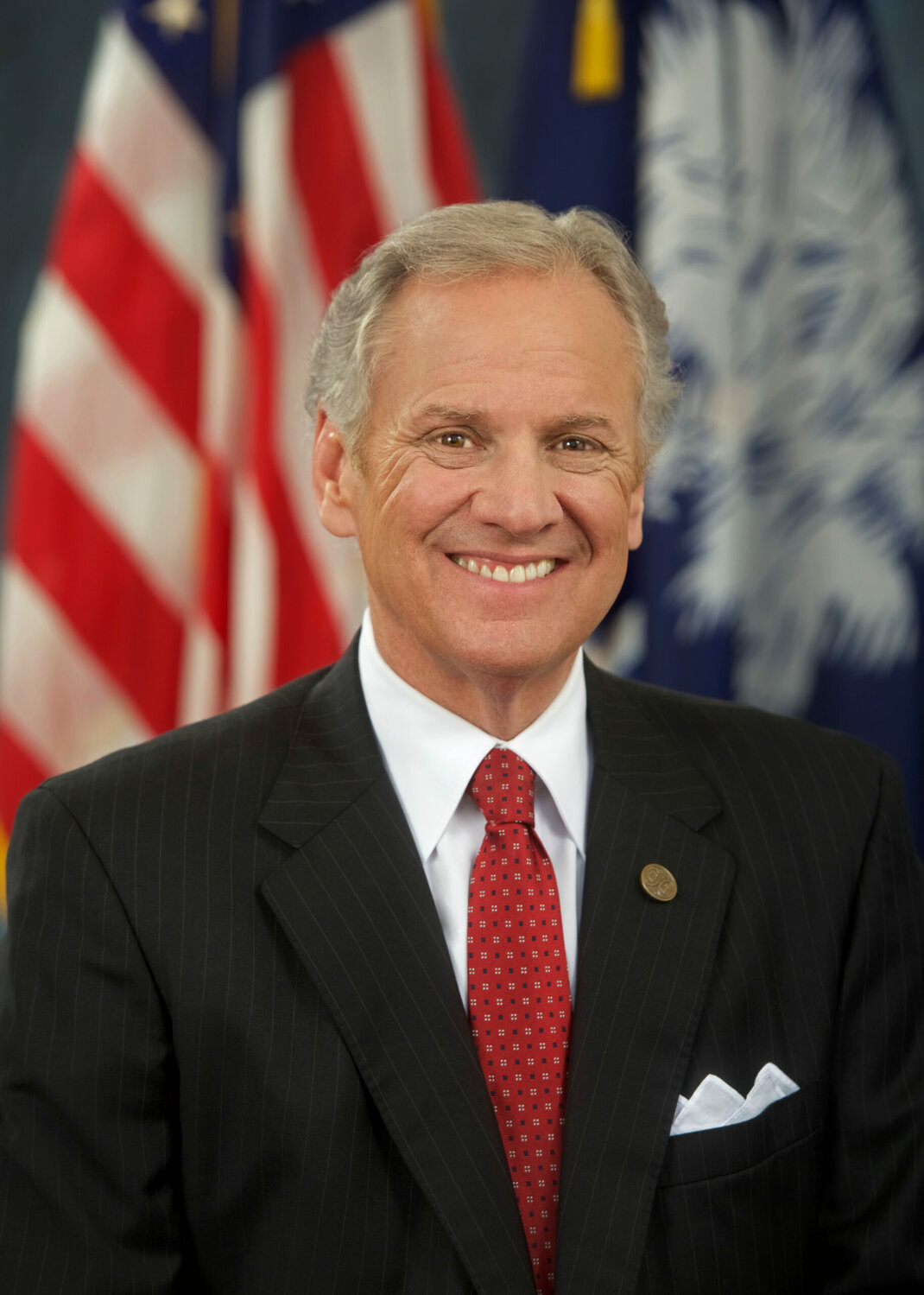
South Carolina Governor Henry McMaster delivered his 2025 State of the State address Wednesday night, highlighting economic growth, tax cuts, infrastructure investments, and education reform. While Republican leaders praised his vision, Democratic lawmakers criticized his administration for financial mismanagement and failing to address pressing issues such as education funding and healthcare access.
Economic growth and energy policy
Governor McMaster celebrated the state’s economic progress, citing a $1.8 billion budget surplus and $8.2 billion in capital investments in 2024. He announced major investments from companies such as Boeing, Google, and EnerSys, attributing the state’s success to its business-friendly environment.
State Senator Jeff Zell (R-District 36) lauded the governor’s focus on energy, calling it a “huge honor” to witness the speech firsthand. “We know we have a looming energy crisis, particularly with the influx of growth and population expansion,” Zell said. He emphasized that addressing energy needs will be a priority for both the House and Senate this session, particularly in rural areas like Clarendon County.
Representative Fawn Pedalino (R-District 64) echoed Zell’s sentiments, adding that expanding nuclear and natural gas energy production could help lower costs for residents. “If we’re producing our own energy, not only is it going to drive down the cost, but we can actually make money,” she said.
Moye Graham, chairman of the Clarendon County GOP, praised the governor’s commitment to nuclear energy and environmental preservation. “His comments about the history of South Carolina and our future show his commitment to taking care of our planet and especially our state,” Graham said.
Democratic criticism: Transparency and accountability
Senator Margie Bright Matthews (D-Colleton) offered a sharp critique of McMaster’s economic outlook, highlighting a $1.8 billion discrepancy in the state’s treasury uncovered by the Finance Committee. “The truth is, our economy can’t be as robust as you’ve described, Governor, since our Finance Committee recently uncovered a $1.8 billion discrepancy in our Treasury,” Bright Matthews said. She criticized the lack of accountability from state officials, including Treasurer Curtis Loftis, and warned of potential repercussions from an ongoing SEC investigation.
She also challenged McMaster’s tax cut proposals, suggesting that funds should be reinvested in education, workforce development, and infrastructure. “We cannot continue to pay millions to outside accountants to ‘hold’ the treasurer’s hands,” she said. “Shouldn’t that money go toward education, workforce development, and critical infrastructure investments?”
Education and workforce development
McMaster proposed raising the minimum starting teacher salary to $50,000 this year instead of 2026, citing the state’s need to remain competitive. He also advocated for expanding school choice through the Education Scholarship Trust Fund.
Bright Matthews rejected the governor’s push for private school vouchers, arguing that they divert funds from public schools. “South Carolina is ranked 42nd in education,” she said. “When we recruit new industries, the first question they ask is: ‘How are your schools performing on a national level?’ Companies know they’re going to need an educated workforce.”
She also criticized the depletion of the South Carolina Education Lottery funds, warning that it could impact college affordability for thousands of families.
Infrastructure and disaster relief
McMaster emphasized the importance of continued investments in roads and bridges, proposing an additional $100 million for bridge construction. He also requested $50 million to cover debris removal and infrastructure repairs following Hurricane Helene, the deadliest storm in South Carolina history.
Bright Matthews called for a more proactive approach to infrastructure investment, including high-speed transit systems and broadband expansion. “To prepare for these new jobs, we must invest in clean energy, broadband access, a strong education system, and workforce readiness partnerships,” she said.
Public safety and Law enforcement support
The governor touted South Carolina’s new gun laws, which increased penalties for illegal firearm possession, and highlighted an 86% increase in arrests under the new measures. He also called for additional funding for law enforcement pay raises and proposed a $2,000 state income tax credit for first responders.
Zell has plans to introduce a bill modeled after similar legislation in Georgia and Florida, known as the “Halo Act.” The proposed law would establish a 25-foot buffer around active law enforcement situations to prevent interference while still allowing public engagement.
He clarified that the law is aimed at preventing interference rather than restricting the public’s right to record. “Interference. Okay, that’s all it is. Is interference,” Zell said. “I would never limit someone’s First Amendment. Not for a million years. My name is Jeff Zell. I am the new senator, not the old one.”
Pedalino emphasized the need for stronger protections for K-9 officers, noting recent legislative efforts to enhance penalties for harming police animals. “We have animal rights laws already—why wouldn’t we protect our police officers as well?” she said.
Looking ahead
While McMaster painted an optimistic vision for South Carolina’s future, Democratic lawmakers remain skeptical, urging more transparency and investment in public services. As legislative debates unfold, the contrast between the governor’s priorities and the opposition’s demands for accountability will likely shape the state’s policy direction in 2025.
link