


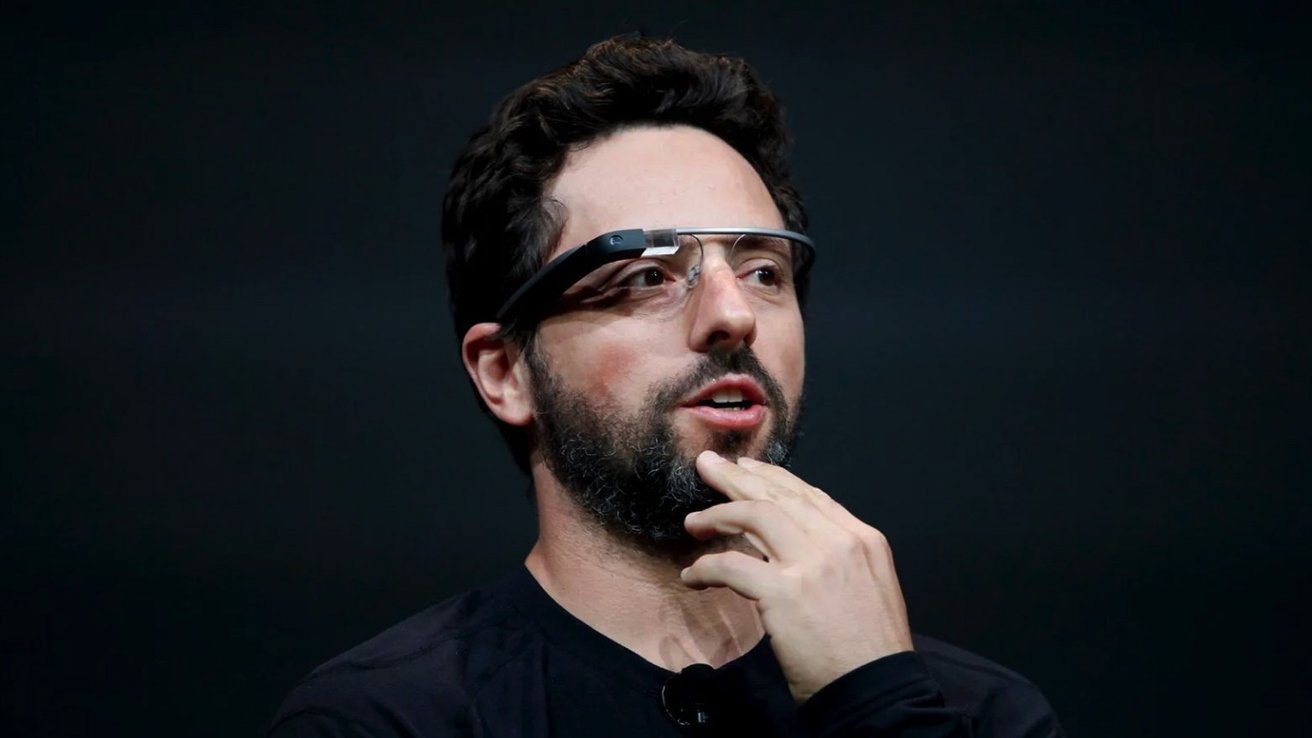
Looking back on Google Glass, Google co-founder Sergey Brin thought he was “the next Steve Jobs,” a mindset that pushed the device out the door before it was ready for consumers.
Smart glasses are back, though whether or not that’s a good thing remains to be seen. Meta’s Ray-Ban Meta lineup is the current most well-known iteration of the technology, but it’s certainly not the first.
All the way back in 2012, Google introduced Google Glass, a lensless pair of smart glasses, to a limited audience. While Glass wasn’t the first pair of smart glasses, it was certainly the most widely known.
And, as many of us remember, it was almost immediately a commercial failure. And it seems like one of Google’s founders remembers the failure, too.
Sergey Brin, Google and Alphabet co-founder, recently spoke at Stanford for the engineering school’s centennial year. As Inc writes, he took the chance to explain how aspiring entrepreneurs could learn from his mistakes, citing Glass as the primary example.
“When you have your cool, new wearable device idea, really fully bake it before you have a cool stunt involving skydiving and airships,” Brin said. “That’s one tip I would give you.”
While the advice was funny, it was also extremely useful. Google Glass famously rushed to market, half-baked at best. It was met with intense public backlash for a multitude of reasons.
People didn’t like its strange, clunky design, nor did they like the fact that it had a 5 megapixel camera crammed into it. And they most certainly didn’t like its $1,500 price tag, which equates to about $2,120 in today’s money.
In comparison, the Meta Ray-Ban display costs $799 — which is expensive, but decidedly less so.
“I think I tried to commercialize it too quickly, before, you know, we could make it more, you know, as cost-effectively as we needed to and as polished as we needed to from a consumer standpoint and so forth,” Brin said.
“I sort of, you know, jumped the gun and I thought, ‘Oh, I’m the next Steve Jobs, I can make this thing. Ta da.'”
His insights may seem obvious now, but hindsight is 20/20. It’s easy to remember commercial successes — and catastrophic failures — but it’s equally easy to forget the tech that doesn’t survive.
Apple has had its own failures, with the Apple Newton that was ultimately killed by Jobs being the easiest comparison to make with Google Glass. Both products were ahead of their times, prohibitively expensive, and both became punchlines more than products.
Steve Jobs killed the Newton in 1997.
However, Apple didn’t abandon the handheld market after the Newton failed. The experience became part of a longer learning curve that ultimately fed into the iPhone’s development years later. It remains to be seen what lessons Google learned that carried forward.
link